
GAM Journal · Commodity Insights
Beyond Chocolate: Understanding the Many Uses of African Cocoa Beans and Where to Source Them

Beyond Chocolate: Understanding the Many Uses of African Cocoa Beans and Where to Source Them
Sourcing cocoa beans from Africa presents opportunities for international buyers across the chocolate, food, cosmetics and personal-care industries. Cocoa is much more than an ingredient for chocolate; it is a versatile agricultural raw material with applications across several manufacturing sectors..
Africa occupies a central position in the global cocoa trade. The continent is home to some of the world’s largest cocoa-producing countries, creating opportunities for international buyers seeking agricultural ingredients from African origins.
Yet sourcing cocoa successfully involves more than locating a supplier. Quality can be affected by harvesting, fermentation, drying, storage, handling and transportation. Buyers also need confidence in the origin, specifications and documentation accompanying their purchases.
At GAM Exports, we believe understanding the product and its supply chain is the starting point for responsible sourcing.
1. From cocoa bean to chocolate: How cocoa is processed
Cocoa begins as a seed inside the fruit of the cacao tree. Once harvested, the pods are opened and the beans, surrounded by a sweet pulp, are removed.
The beans undergo two particularly important post-harvest processes: fermentation and drying.
During fermentation, naturally occurring microorganisms act on the pulp surrounding the beans. The resulting changes help develop the flavour precursors needed for chocolate production. Poor fermentation can produce weak or undesirable flavours.
The beans are subsequently dried to reduce moisture and prepare them for storage and transportation. Inadequate drying can encourage mould development, while exposure to smoke and other contaminants can affect the final flavour.
Once dried, cocoa beans can be cleaned, sorted, graded, packed and transported to processing facilities.
At the processing stage, the beans are roasted, cracked and separated from their shells to obtain cocoa nibs. These nibs are ground into cocoa liquor, also called cocoa mass.
Cocoa liquor can then be used directly in chocolate production or pressed to separate cocoa butter from cocoa cake. The cake is subsequently ground into cocoa powder.
This creates several commercially important products from one agricultural commodity.
2. Beyond chocolate: The many applications of cocoa
Chocolate remains the most familiar application of cocoa, but its derivatives serve several other industries.
Chocolate and confectionery
Cocoa liquor, cocoa butter and cocoa powder are used in the manufacture of chocolate bars, filled chocolates, truffles, chocolate coatings and other confectionery products.
Cocoa liquor provides much of the characteristic cocoa flavour, while cocoa butter contributes to chocolate’s texture, melting behaviour and finish.
Food and beverage manufacturing
Cocoa powder is widely used in biscuits, cakes, pastries, ice cream, desserts, chocolate spreads, sauces and flavoured beverages.
Manufacturers may require different cocoa powder specifications depending on the intended application, including flavour, colour, fat content and processing characteristics.
Cosmetics and personal care
Cocoa butter is valued for its emollient properties and is used in moisturising creams, body butters, lotions, soaps and other personal-care formulations.
Its texture and skin-conditioning characteristics make it a useful ingredient for manufacturers of cosmetic and skincare products.
Pharmaceutical and specialised formulations
Cocoa butter has also been used as an excipient in pharmaceutical formulations, including certain suppository bases. Its physical properties make it useful in applications where controlled melting characteristics are important.
Animal feed and other by-products
Cocoa processing also produces materials beyond the main bean-derived products. Cocoa pod husks, bean shells and the pulp surrounding the beans have potential applications, including certain animal-feed and beverage uses.
These applications require appropriate processing and safety considerations; not every by-product is automatically suitable for commercial use.
The breadth of these applications means cocoa can serve buyers in food manufacturing, ingredient processing, cosmetics and selected industrial sectors.
3. Where can cocoa beans be sourced in Africa?
Africa is one of the world’s principal cocoa-producing regions. According to FAO-derived 2024 production data, the continent produced approximately 3.42 million tonnes of cocoa beans, representing around 65% of global production.
The major African origins include:
- Côte d’Ivoire: Africa’s largest cocoa producer and the world’s leading producer. It is a major origin for buyers seeking conventional cocoa beans at commercial scale.
- Ghana: One of the world’s major cocoa-producing countries, with an established cocoa sector and recognised export market.
- Nigeria: An established cocoa-producing country, with production concentrated particularly in the southwest.
- Cameroon: An important Central African cocoa origin with an established export industry.
- Sierra Leone: A smaller West African producer with cocoa sourcing opportunities.
- Uganda and the Democratic Republic of Congo: Additional origins in East and Central Africa.
Other African countries reporting cocoa production include Liberia, Togo, Guinea, Madagascar, Tanzania and São Tomé and Príncipe.
The scale of production differs considerably between these countries. A country appearing on a production list does not automatically mean that suitable export volumes are available at a particular time.
For buyers, the right origin depends on the required volume, bean characteristics, quality specifications, price, delivery arrangements, and destination market.
4. Common challenges when sourcing cocoa from Africa
Despite the continent’s production capacity, cocoa procurement can involve several challenges.
Inconsistent post-harvest quality
Fermentation and drying are critical to the development and preservation of cocoa flavour. Differences in handling practices, weather conditions, and available equipment can result in inconsistent quality between batches.
Poor drying and humid storage conditions can encourage mould, while smoke contamination can introduce undesirable flavours.
Fragmented supplier networks
Cocoa production involves many farmers and intermediaries. Buyers seeking larger or consistent quantities may need to coordinate across multiple suppliers and collection points.
This can complicate procurement, communication, quality consistency, and delivery scheduling.
Limited visibility into origin and handling
A supplier’s description of a product is not necessarily sufficient evidence of its origin, production history, or handling conditions.
Buyers may need additional documentation and records to understand where their cocoa came from and how it moved through the supply chain.
Storage and transportation
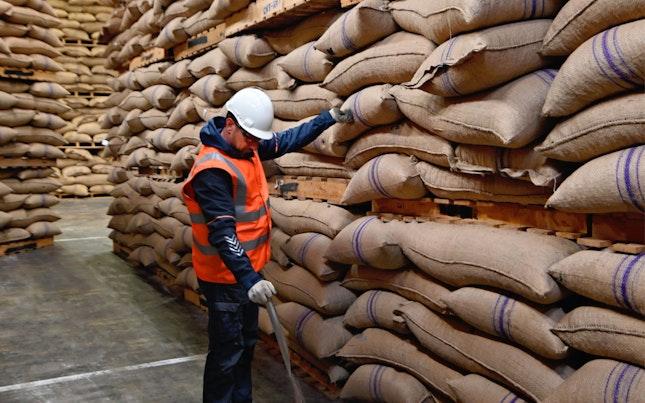
Cocoa beans are vulnerable to moisture, contamination, and unsuitable storage conditions. Warehouses and transport containers must be appropriate for food-grade commodities.
Poor handling after drying can undermine the quality achieved during processing at origin.
Documentation and destination-market requirements
Exporting cocoa requires the appropriate commercial, customs and product documentation. Additional requirements may apply depending on the importing country and the intended use of the cocoa.
Buyers operating in regulated markets must consider relevant food-safety, traceability and environmental requirements before placing orders.
These challenges are not reasons to avoid African cocoa. They are reasons to approach procurement with proper planning and verification.
5. How GAM Exports helps coordinate cocoa sourcing
At GAM Exports, our approach begins with the buyer’s requirements rather than an assumption that one supplier or one origin will suit every transaction.
We work to connect international buyers with suitable African sourcing opportunities and coordinate the commercial and logistical activities required to move commodities from origin to destination.
For cocoa procurement, this can include:
Buyer-led supplier identification
We identify potential producers, aggregators and suppliers against the buyer’s requested origin, quantity, product specifications and delivery requirements.
Supplier assessment
We coordinate the collection and review of relevant supplier information, including business details, available production capacity, product information and applicable certifications.
Quality verification arrangements
Where required, we coordinate sampling, inspection and testing arrangements against specifications agreed with the buyer. Independent laboratory testing can be considered where appropriate.
Procurement and consolidation
We coordinate agreed procurement arrangements and can arrange the movement of commodities to an appropriate warehouse facility for handling and consolidation, subject to the product and transaction requirements.
Documentation and traceability
We work to maintain relevant sourcing, procurement, quality and shipment records, giving buyers greater visibility into the transaction and the information available about their commodities.
Export coordination
GAM can manage the export arrangements and act as exporter of record, coordinating the documentation and shipment process under the agreed commercial terms.
Our objective is to give buyers one accountable partner for coordinating the sourcing and export process rather than leaving them to manage multiple disconnected relationships.
6. Looking beyond the bean
Cocoa is an important example of the opportunities available across African agricultural supply chains.
From chocolate manufacturers and food processors to cosmetics companies and ingredient distributors, different buyers have different requirements. Some need conventional fermented cocoa beans; others are looking for cocoa butter, powder or liquor.
Understanding that distinction matters.
The right sourcing arrangement begins with a clear product specification, a realistic quantity, an agreed quality standard and a suitable destination market.
GAM Exports works with international buyers looking to explore agricultural commodities, natural ingredients and selected solid minerals from across Africa.
Looking to source cocoa beans from Africa?
Tell us your required quantity, preferred origin, quality specifications, intended application, and destination country.
We will review your requirements and explore suitable sourcing and export arrangements.
GAM Exports — Africa’s Resources. Handled with Confidence.
Commodity availability, supplier capability, quality characteristics, and export requirements are assessed on a transaction-by-transaction basis. References to sourcing origins do not constitute a guarantee of current stock or available export volumes.
More from the Journal
Commodity Insights
7 Essential Checks to Verify an African Commodity Supplier Before You Buy
To verify an African commodity supplier properly, you need more than a website, a quotation, or an email exchange. Finding a supplier is often the first step in…

Buyer Resources
Sourcing Commodities from Africa: What International Buyers Should Know Before Choosing a Supplier
Sourcing commodities from Africa offers international buyers opportunities to access a wide range of agricultural commodities, natural ingredients, and solid minerals. From agricultural produce and plant-based ingredients to…